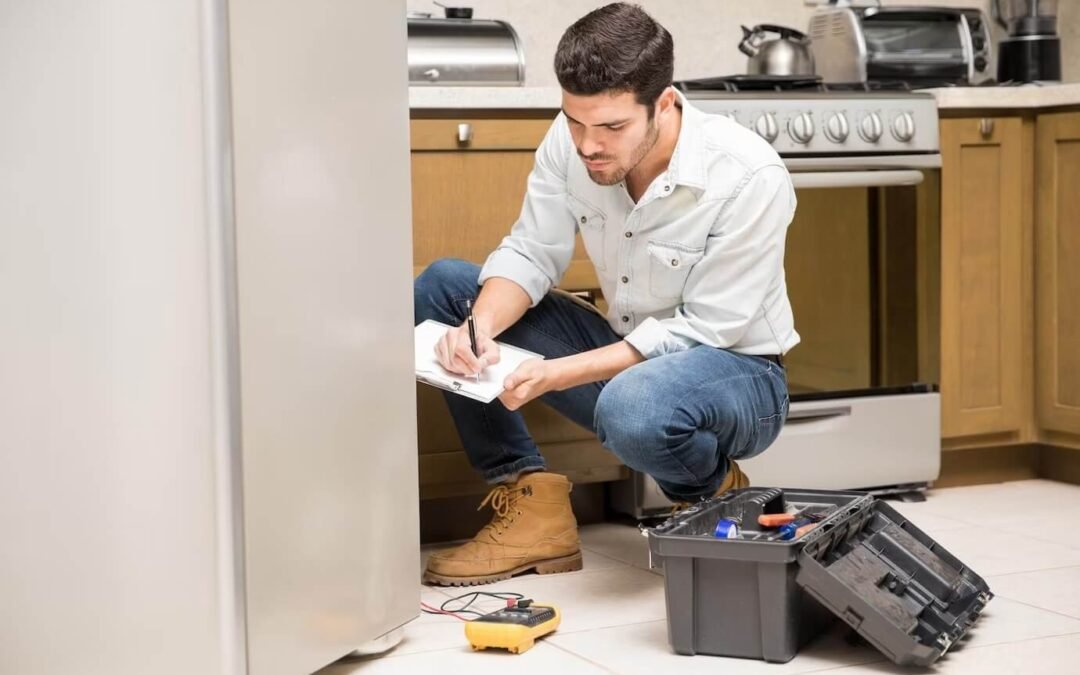
A refrigerator repair service can help protect your food, your budget, and your household appliances before one small cooling problem turns into a bigger repair.
A fridge problem rarely starts as a total breakdown.
It often begins with warm drinks, loud noises, frost buildup, water on the floor, or food spoiling earlier than it should.
For dependable help with a refrigerator repair service, it is smart to take action before the issue gets worse or the appliance stops working completely.
Why Refrigerator Problems Need Fast Action
Your refrigerator has one main job: to keep food cold and safe.
If the fridge rises above 40°F, meat, dairy, leftovers, and other perishable foods can become unsafe faster than many customers expect.
That is why refrigerator problems should not be treated like a minor household inconvenience.
A cooling issue can affect your grocery bill, your schedule, and your daily routine.
A reliable service can diagnose the problem, explain the cost, and recommend the right repair before the unit causes more stress at home.
Common issues include temperature problems, leaks, loud noises, broken fans, dirty coils, bad door seals, and electrical failures.
Some are simple to fix.
Others need professional tools, parts, and certified technicians.
1. Your Fridge Is Not Cooling Properly
A refrigerator repair service is often needed when your fridge is running but not keeping food cold.
This is one of the most important warning signs because it affects food safety right away.
Your refrigerator section should usually stay at or below 40°F.
Your freezer should stay around 0°F.
If drinks feel warm, leftovers spoil quickly, or frozen foods start to soften, the appliance is not doing its job.
Possible causes include:
- Dirty condenser coils
- Blocked interior vents
- Faulty thermostat
- Weak evaporator fan
- Failing compressor
- Damaged door gasket
- Defrost system problem
Before calling for appliance repair, check the temperature setting and make sure food is not blocking vents.
If the issue continues, it is time to schedule service.
2. Food Spoils Before the Expiration Date
Food that spoils too early is a clear sign that the refrigerator temperature may be unstable.
Milk may smell sour.
Vegetables may wilt fast.
Deli items may feel warmer than normal.
This often happens when the fridge has poor airflow or uneven cooling.
One area may feel cold while another area stays too warm.
That can happen because of a bad fan, blocked vent, faulty sensor, or worn door seal.
Use an appliance thermometer to check the real temperature.
Place it in the center of the fridge and leave it there for several hours.
If the reading stays above 40°F, the problem should be diagnosed quickly.
3. The Refrigerator Makes Loud Noises
Most appliances make some sound.
A soft hum, light click, or gentle fan noise can be normal.
But loud noises should not be ignored.
Grinding, buzzing, rattling, knocking, or squealing can point to a working part under stress.
A fan blade may be hitting ice.
A motor may be wearing out.
The compressor may be struggling to start.
| Noise | Possible Issue |
|---|---|
| Buzzing | Fan, compressor, or water valve problem |
| Grinding | Motor wear or fan obstruction |
| Rattling | Loose panel, drain pan, or uneven floor |
| Clicking | Start the relay or compressor issue |
| Squealing | Fan motor or bearing issue |
A technician can inspect the appliance, find the source, and fix the issue before the part fails.
4. Water Is Leaking on the Floor
A leaking refrigerator can damage flooring, cabinets, and walls.
It can also create a slip risk in the kitchen.
Water near the front of the fridge may come from a clogged defrost drain.
Water behind the unit may come from a loose line, cracked tube, or damaged inlet valve.
Common causes include:
- Clogged defrost drain
- Cracked drain pan
- Loose water line
- Damaged inlet valve
- Blocked ice maker line
- Excess condensation
- Poor door seal
If the fridge has a water supply line and the leak is active, turn off the water supply.
Then schedule appliance repair before the damage spreads.
5. The Freezer Has Heavy Frost Buildup
A thin layer of frost may happen in some older units.
But thick frost on the freezer walls, vents, shelves, or food packages is a warning sign.
Heavy frost can block airflow.
When airflow is blocked, the freezer may look cold while the refrigerator section starts warming up.
This can happen because of:
- Bad defrost heater
- Faulty defrost thermostat
- Defrost timer failure
- Damaged door gasket
- Door not closing fully
- Blocked freezer drain
Do not chip thick ice with a sharp tool.
That can damage the appliance.
A professional can safely inspect the defrost system and fix the cause.
6. The Refrigerator Runs All Day
Your refrigerator should cycle on and off.
It should not run nonstop.
If it seems like the motor never rests, the appliance may be fighting to hold the right temperature.
This can raise utility costs and wear down important parts.
Possible causes include:
- Dirty condenser coils
- Warm air is entering through the door seal
- Faulty thermostat
- Poor airflow
- Weak compressor
- Low refrigerant
- Overpacked shelves
You can do a simple seal test at home.
Close the door on a dollar bill.
If the bill slides out easily, the gasket may not seal tightly.
That small issue can force the fridge to work harder every day.
7. The Back or Bottom Feels Too Hot
Some warmth around the back or bottom of a refrigerator is normal.
Extreme heat is not.
If the back of the fridge feels very hot, the appliance may not be releasing heat correctly.
This can happen when condenser coils are covered in dust or when the condenser fan is not working.
The fridge may still run, but it may become less efficient.
It may also begin to cool poorly.
Leave a few inches of space behind the appliance so air can move.
If the heat remains strong after basic cleaning and spacing, professional service may be needed.
8. The Door Seal Is Cracked, Loose, or Dirty
The door gasket keeps cold air inside the refrigerator.
If the seal is cracked, loose, dirty, or warped, warm air can enter the fridge.
That can cause condensation, frost, high energy use, and uneven temperatures.
Watch for these signs:
- Moisture around the door
- Mold or food buildup on the gasket
- Door popping open
- Weak suction when closing
- Gaps around the seal
- Cracks in the rubber
Clean the seal with mild soap and warm water.
If the gasket still does not hold, it may need replacement.
This is a small part, but it plays a major role in cooling performance.
9. The Ice Maker Stops Working
An ice maker problem can be more than an inconvenience.
It may point to a freezer temperature issue, a water supply problem, or a faulty valve.
If the freezer is too warm, the ice maker may slow down or stop.
If the water line is blocked, the ice maker may not fill.
Common warning signs include:
- No ice production
- Small ice cubes
- Hollow ice cubes
- Ice clumps together
- Water leaks near the bin
- Odd taste or smell
- Noise without filling
Check the freezer temperature first.
If it is above 0°F, the cooling system may need attention.
If the temperature is correct, the issue may involve the water line, inlet valve, or ice maker parts.
10. The Fridge Turns On and Off Too Often
Short cycling means the refrigerator turns on and off more often than it should.
This may happen because of a bad thermostat, dirty coils, electrical issue, start relay problem, or compressor trouble.
Short cycling puts stress on the appliance.
It can also cause unstable temperatures.
Food may feel cold at one time and too warm later in the day.
If you hear repeated clicking or quick start-and-stop sounds, take action soon.
This type of problem can become more expensive if ignored.
What to Expect During a Repair Appointment
Scheduling appliance repair services is often simple.
Many customers can request service online or by phone and choose an appointment time that fits their schedule.
On the day of the appointment, customers may receive a call or text alert so they can track when the technician will arrive.
A technician will usually inspect the fridge, diagnose the issue, explain the repair, and provide an estimate before starting the job.
A fully stocked repair vehicle can help many common repairs get completed the same day.
That depends on the part needed, the appliance condition, and the complexity of the problem.
A professional may check:
- Interior and freezer temperatures
- Door seals and airflow
- Condenser coils and fans
- Evaporator fan and defrost system
- Thermostat and sensors
- Compressor and start relay
- Drain lines and water supply
- Ice maker parts
- Electrical connections
- Replacement parts needed
Clear communication matters.
Reputable repair services explain diagnostic fees, labor charges, and part costs upfront.
Why Certification, Insurance, and Warranties Matter
Refrigerators can involve electrical parts, refrigerant, water lines, and sealed cooling systems.
That is why proper training matters.
Technicians who handle refrigerants should hold EPA Section 608 certification.
This certification applies to work involving refrigerant recovery, handling, and related service procedures.
Insurance also matters.
Comprehensive liability insurance can help protect customers from out-of-pocket costs if property damage happens during a repair visit.
Warranties are important, too.
Many appliance repair services offer limited warranties on parts and labor.
Workmanship warranties often range from 30 to 90 days or longer.
Some parts may have longer coverage, depending on the part type and warranty terms.
Always ask what is covered before the repair begins.
How to Choose a Reliable Appliance Repair Service
Choosing the right service can save time, money, and stress.
Look for a business that is clear, prompt, and professional from the first contact.
A trustworthy service should make scheduling easy, arrive during the appointment window, and explain the problem in plain language.
Use this checklist:
- Certified technicians
- Proper licensing where required
- Liability insurance
- Clear diagnostic fee
- Written estimate
- Transparent labor and part costs
- Warranty on parts and labor
- Recent customer reviews
- Same-day or next-day availability when possible
- Professional tools and repair vehicle
- Experience with major brands
- Friendly communication
- Clear arrival updates by call or text
Online reviews can help you judge punctuality, quality, problem resolution, and customer service.
Look for patterns, not one random review.
If many customers mention fast scheduling, clear pricing, and repairs completed quickly, that is a good sign.
Repair or Replace: A Simple Way to Decide
A repair may make sense when the refrigerator is not too old, the cabinet is in good condition, and the repair cost is reasonable.
Replacement may make more sense when the appliance is very old, repairs keep happening, or a major sealed system repair costs too much.
Use this simple guide:
| Situation | Better Next Step |
|---|---|
| Fridge is under 8 years old | Repair may be worth checking first |
| One clear part has failed | Repair is often practical |
| Multiple systems are failing | Compare repair and replacement costs |
| Food keeps spoiling | Schedule a diagnosis quickly |
| Unit runs nonstop | Check repair options before damage grows |
| Water leak is active | Act fast to prevent property damage |
The best decision depends on age, cost, parts, energy use, and how often the appliance has needed repair in the past year.
Quick Checks Before Scheduling Service
Before booking an appointment, try a few simple checks.
These steps may help you spot an easy fix.
- Confirm the power cord is plugged in.
- Check the circuit breaker.
- Set the fridge to 37°F.
- Set the freezer to near 0°F.
- Make sure vents are not blocked.
- Remove excess food from crowded shelves.
- Clean the door gasket.
- Check for gaps around the door.
- Move the fridge a few inches from the wall.
- Use an appliance thermometer.
If these steps do not fix the problem, schedule appliance repair.
Do not keep guessing while food temperatures rise.
Final Thoughts
A refrigerator problem is easier to fix when you catch it early.
Warm food, loud noises, leaks, frost, short cycling, and nonstop running are all signs that something is wrong.
A reliable repair visit can diagnose the issue, explain the cost, and help prevent spoiled food, higher energy bills, and more damage.
Acting early is the best way to protect your fridge, your home, and your groceries.